Tracking Player Shifts: Pontoon Tables Versus Wheel-Based Blackjack in Virtual Environments
Written by Taylor Schmidt · Sep 26, 2026
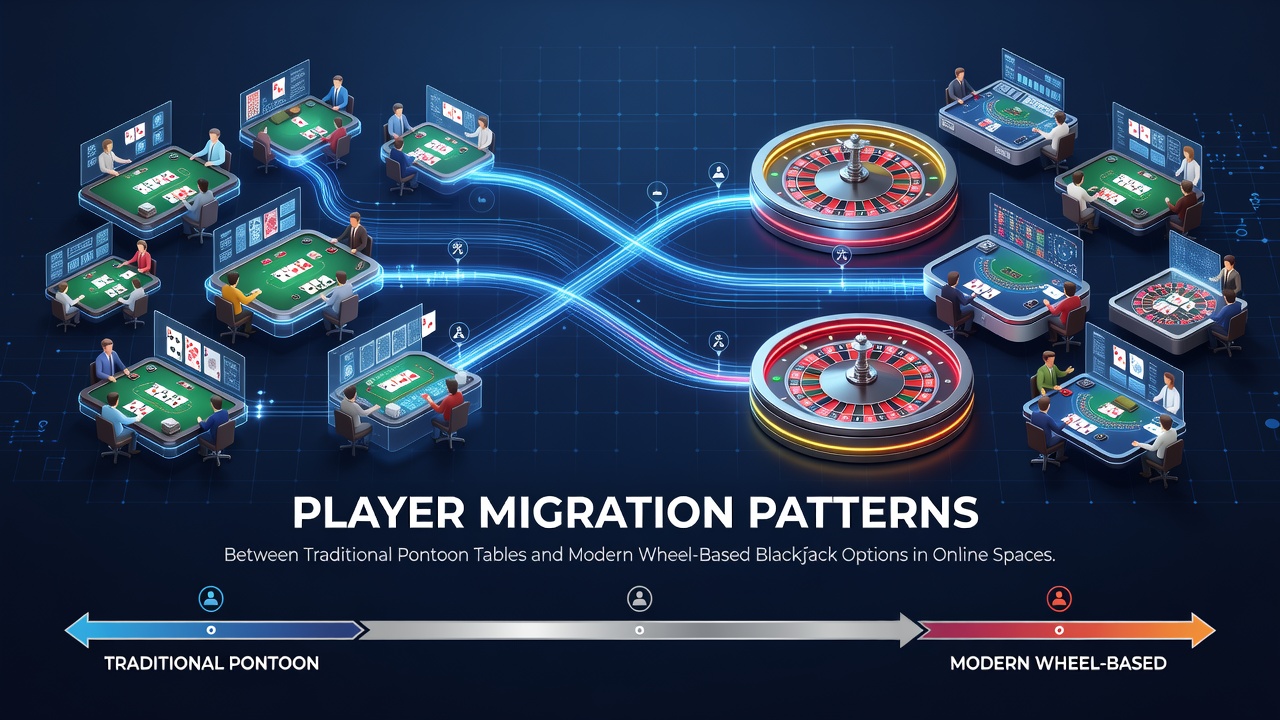
Tracking Player Shifts: Pontoon Tables Versus Wheel-Based Blackjack in Virtual Environments
Data from recent industry reports shows players moving between pontoon tables and wheel-based blackjack options at measurable rates across online platforms, with patterns emerging from factors like game mechanics, payout structures, and platform accessibility. Observers note that pontoon, which features dealer cards dealt face down and specific rules for five-card hands, retains a dedicated following, while wheel-based variants introduce random multipliers and bonus rounds that alter standard blackjack flow.
Understanding Core Mechanics Driving Choices
Pontoon requires players to beat the dealer without exceeding 21, yet it differs from classic blackjack through its no-hole-card approach and the option for players to buy additional cards or twist after an initial deal. Wheel-based blackjack options integrate a spinning wheel segment that determines side payouts or multipliers, often activated after certain hand thresholds. Research indicates these distinctions prompt some participants to alternate between formats based on session goals, with data showing increased time spent on wheel variants during promotional periods that boost multiplier frequency.
Studies from academic sources highlight how online interfaces track these transitions through session logs, revealing that players starting at pontoon tables frequently test wheel features within the same account activity. Figures reveal that in regulated markets, average session duration extends by 12 to 18 minutes when wheel elements appear, according to aggregated platform analytics shared by the Nevada Gaming Control Board in their 2025 digital gaming summary.
Regional Trends and Platform Data
Patterns differ by region, with North American operators reporting steady pontoon traffic alongside growth in wheel-integrated tables. European platforms, meanwhile, show higher crossover rates where regulatory frameworks permit rapid game switching. A 2025 report from the Australian Institute of Criminology documented similar behaviors in licensed online environments, noting that players often migrate toward wheel options after experiencing fixed-rule limitations in traditional pontoon rounds.
Key Migration Indicators
- Session overlap: Players maintain active accounts across multiple variants, switching mid-week based on available promotions.
- Stake adjustments: Average bets rise on wheel tables during bonus rounds yet stabilize on pontoon for consistent play.
- Time-of-day effects: Evening hours see increased pontoon volume, while late-night activity favors wheel spins for quicker resolution.
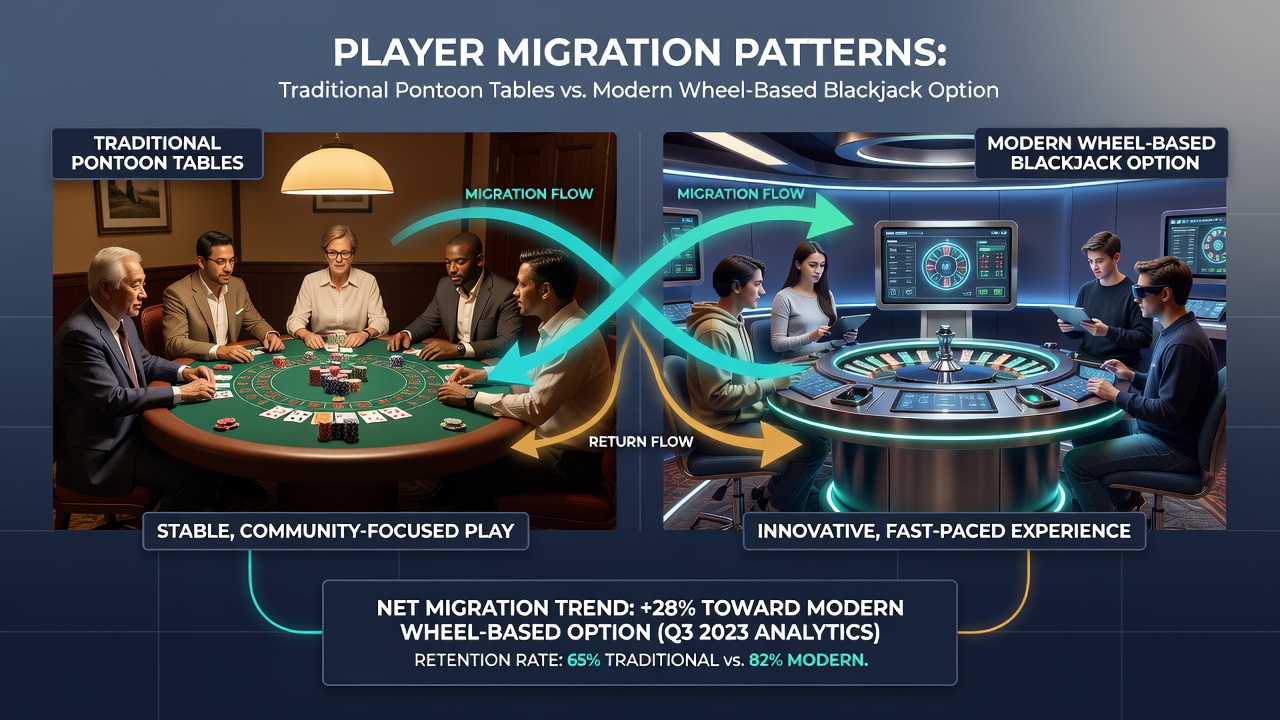
Platform operators release quarterly updates that track these shifts, and one analysis from the Canadian Gaming Association found that 34 percent of surveyed accounts engaged with both formats in a single month during early 2026. Such data points to fluid preferences rather than outright replacement of one style by another.
September 2026 Developments in Online Spaces
As September 2026 approaches, upcoming platform updates from major providers include refined tracking tools that separate pontoon and wheel sessions for clearer analytics. These tools build on existing logs already used by operators to monitor retention. Observers note that regulatory bodies in multiple jurisdictions plan to incorporate migration statistics into annual compliance reviews, which could influence how operators design hybrid tables that blend pontoon rules with optional wheel elements.
Evidence from prior years shows that when platforms introduce unified lobbies allowing seamless transitions, total active users increase without cannibalizing either format. Researchers at the University of Nevada, Reno documented this effect in a 2024 study of digital blackjack environments, where combined access led to broader participation across variants rather than concentration in one category.
Player Behavior Patterns Observed
Take one longitudinal dataset compiled by European trade groups, which tracked accounts over 18 months and identified clusters of activity: some participants stayed exclusively with pontoon for its strategic depth, while others rotated to wheel options after reaching set win thresholds. The patterns suggest that migration occurs in cycles tied to payout variance, with wheel features providing bursts of activity that complement the steadier pace of pontoon rounds.
Additional figures from the New Jersey Division of Gaming Enforcement indicate that mobile sessions account for a larger share of wheel-based play, whereas desktop remains preferred for pontoon due to larger card displays. These location-based differences continue to shape how operators allocate development resources between the two formats.
Conclusion
Current records demonstrate ongoing movement between pontoon tables and wheel-based blackjack across online platforms, driven by mechanical variety and regional access rules. Data collected through 2026 will likely refine these observations further as new tracking standards take effect, providing clearer pictures of how participants distribute their time between established and evolving blackjack expressions.